Complete Step-by-Step Guide for Aryson Exchange Server Backup & Restore Tool
Easily back up Office 365 mailboxes such as Primary Mailbox, Public Folder, Online Archive, and Shared Mailbox of Exchange Online, on-premises, and hybrid to Office 365 and PST with secure authentication methods such as Modern Auth and Client ID & Secret.
-
Table of Content
- Software Working Process
- Activation Guide
- Installation & Uninstallation
Software Working Process
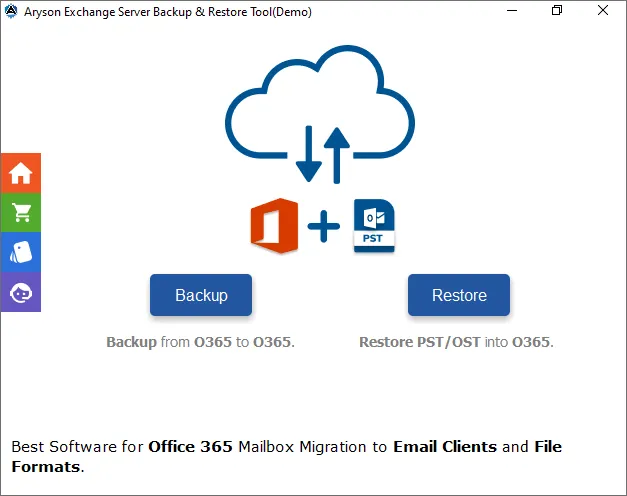
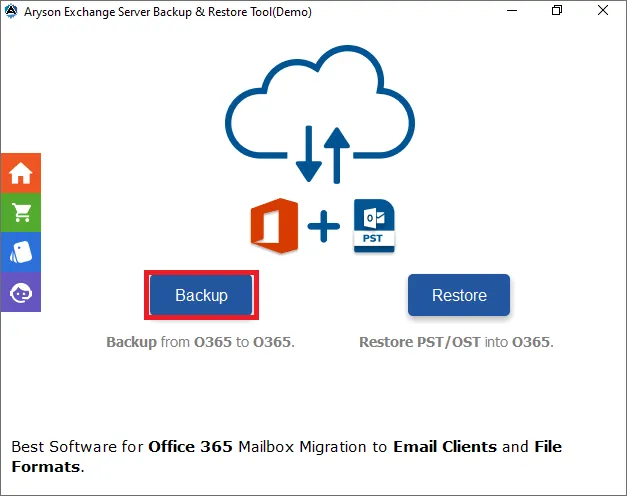
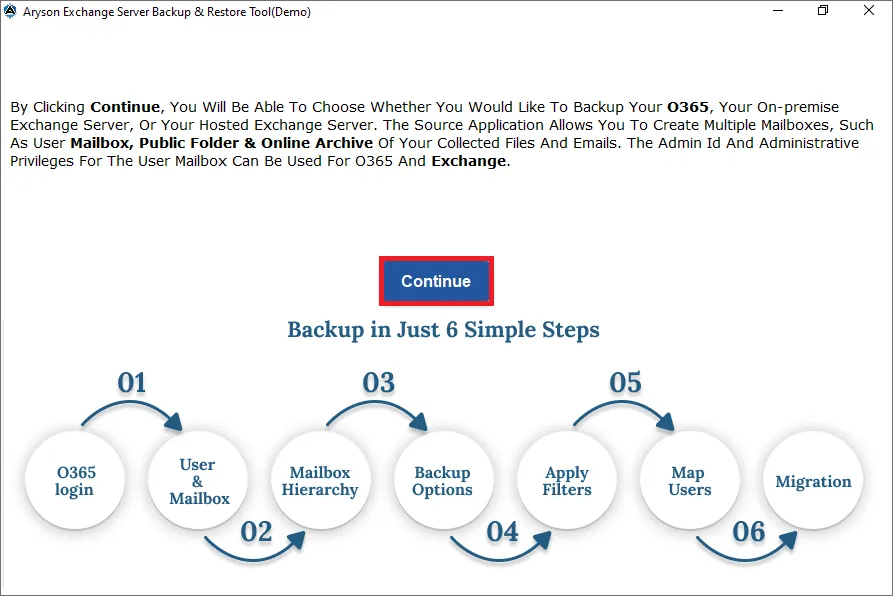
Step 1: Download and install the Aryson Exchange Server Backup & Restore Tool and click Open Browser.
Step 2: Select Office 365 as the source account.
Step 3: Authenticate the Office 365 Account
Choose either Method A or Method B to authenticate the active Office 365 account using valid login credentials.
- Use Single-User OAuth
- Enter the source Office 365 admin account and click Login with Microsoft. Click select a saved account to log in to a previously saved account directly.
- Provide your password and click Sign in.
- Approve Multi-Factor Authentication (MFA)
- If prompted, open the Microsoft Authenticator app on your mobile device.
- Approve the sign-in request.
- If a matching number is displayed (e.g., 45 ), enter that number in the Authenticator app and approve the request.
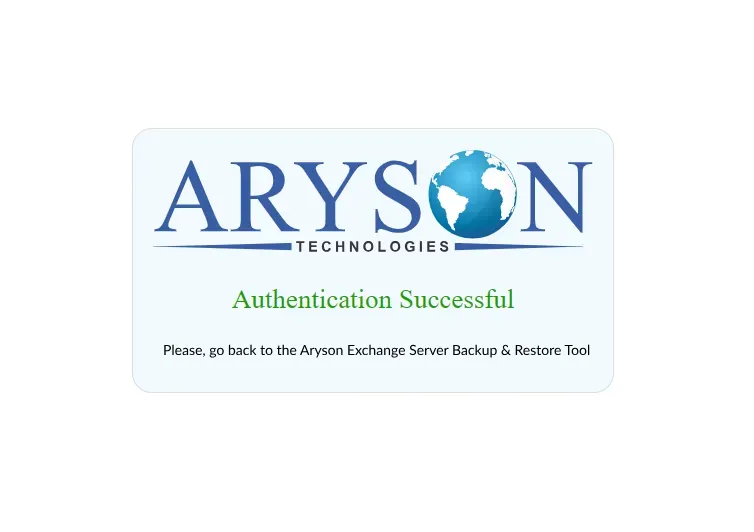
Note: When selecting the Office 365 account in the browser, make sure you are already logged in to the required account.
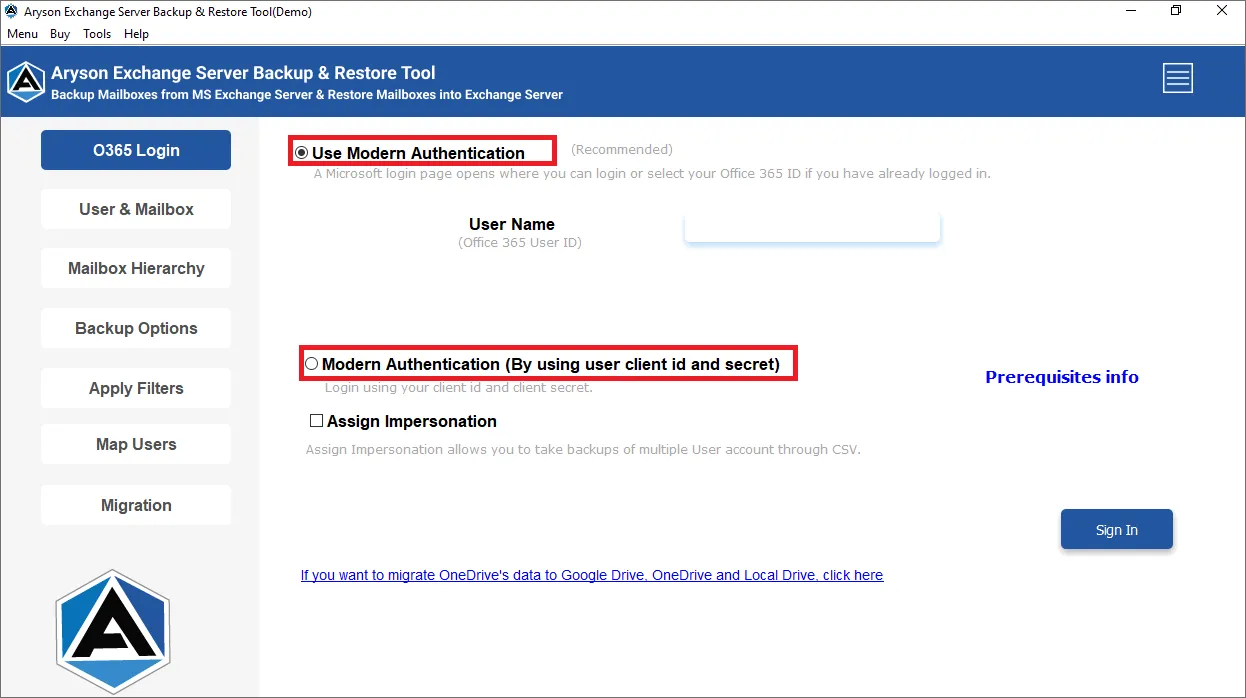
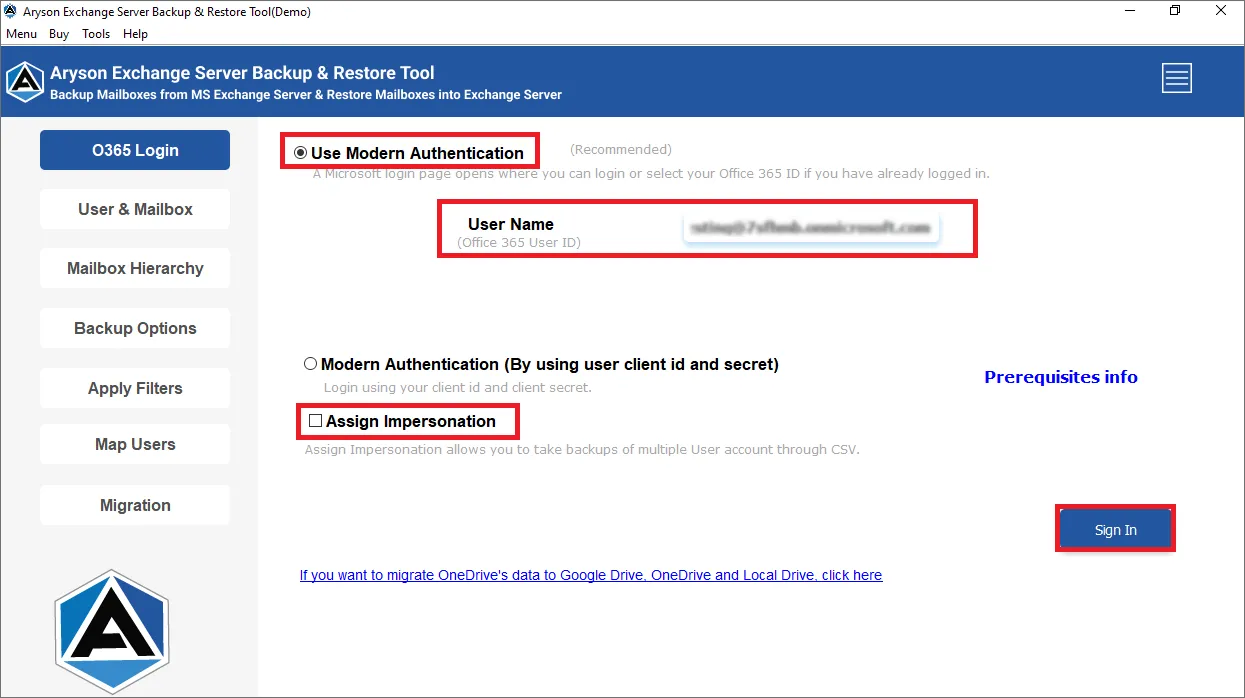
Note: Sign in to the required Microsoft 365 account in your browser before starting the migration. If multiple browser windows are open with different accounts, use the one where the required Microsoft ID is already logged in, as authentication will proceed only in that browser.
- Use Application Credential
- Provide the Microsoft 365 Admin Account, Application (Client) ID, Client Secret, and Tenant ID to establish and authenticate the connection.
Enter Azure Application Details
Fill in the following information from your Azure app registration:
| Field | Description |
|---|---|
| Microsoft 365 Admin Account | Admin email address |
| Application (Client) ID | Azure App Client ID |
| Client Secret | Secret generated in Azure |
| Tenant ID | Microsoft Entra ID (Azure AD) Tenant ID |
If you choose Application Credentials Authentication (Client ID, Client Secret, and Tenant ID), you must first create an Azure App Registration and assign the required API permissions in Microsoft Entra ID (Azure AD).
For complete instructions on creating the Azure Active Directory application and enabling API permissions, visit:
Create Azure Active Directory and Enable API Permission GuideIn the guide at step 17, you need to add the required API permissions. The image below lists all the API permissions that must be configured for successful authentication and migration.
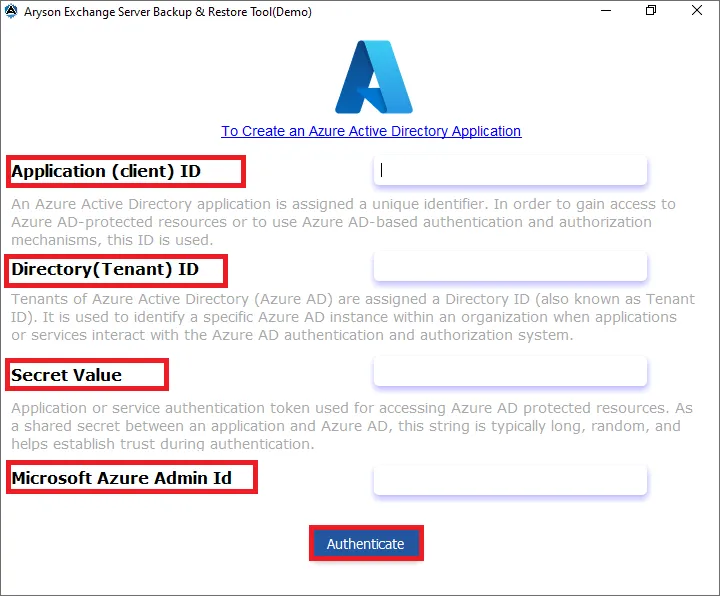
- After generating the credentials, fill in the required fields and click on Authenticate.
- Upload a CSV file
For a bulk backup of Office 365 to Office 365. Click Choose File to upload a CSV file containing email addresses.
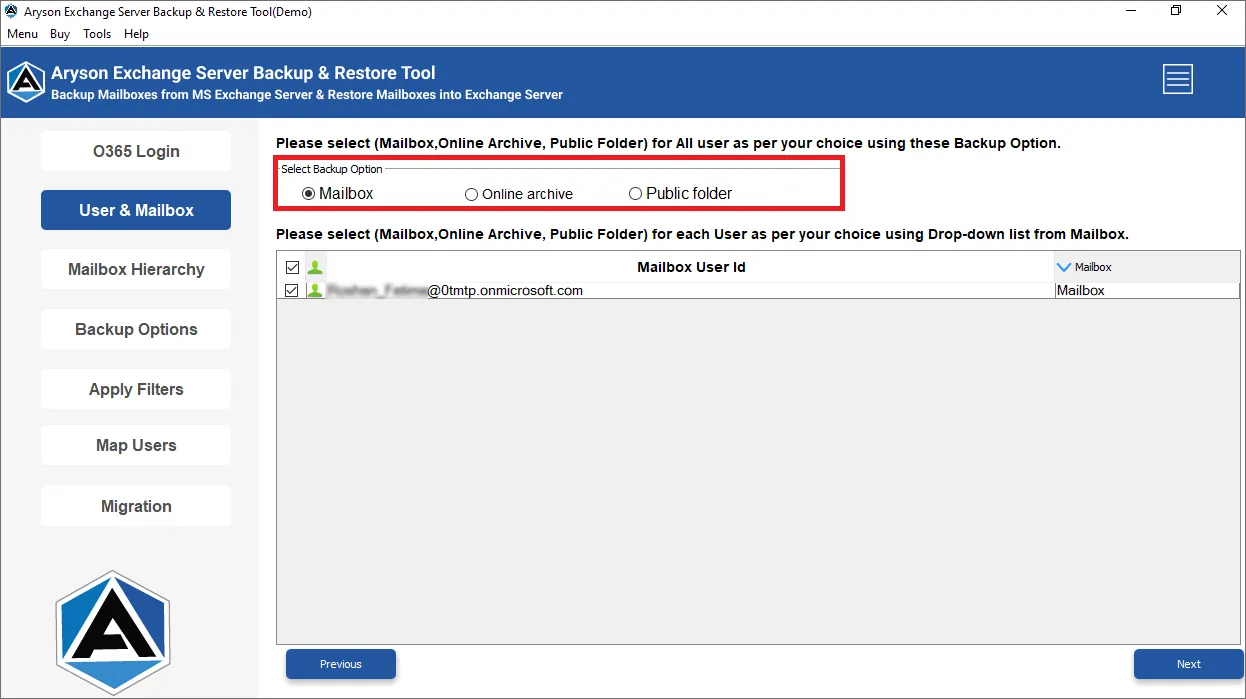
Step 4: Choose the mailbox folders to back up from the available options:
- Primary Mailbox
- Online Archive
- Public Folder
- Shared Mailbox (Using Client ID & Secret authentication only)
You can override the selected folder below in the user mapping.
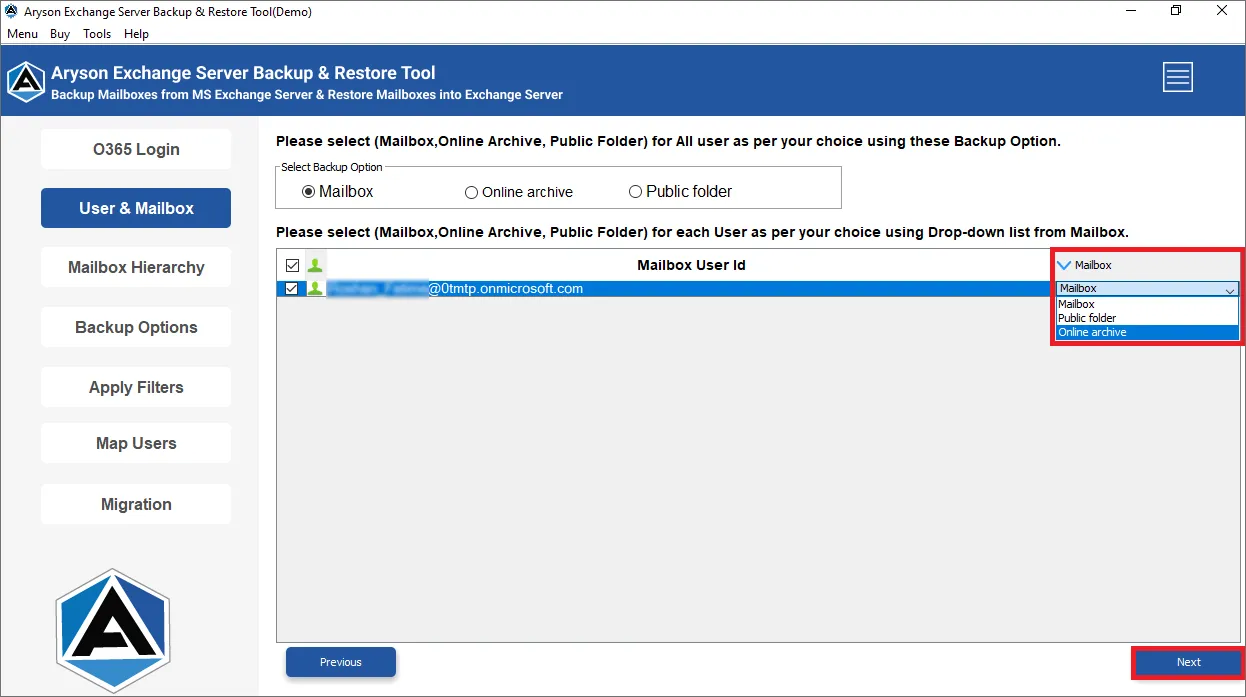
Step 5: Select the folders you want to include in the backup.
- Search folders: Enter folder names in the search bar to find the folder.
- Expand All: Click this to view all available mailbox folders and subfolders.
- Collapse All: Collapses every expanded folder and subfolder in the hierarchy, showing only the top-level folders.
- Select All: Selects all folders and subfolders displayed in the hierarchy.
- Deselect All: Clears the selection from all selected folders and subfolders in the hierarchy.
Software Working Process
Step 6: Select Office 365 as the destination to back up your data.
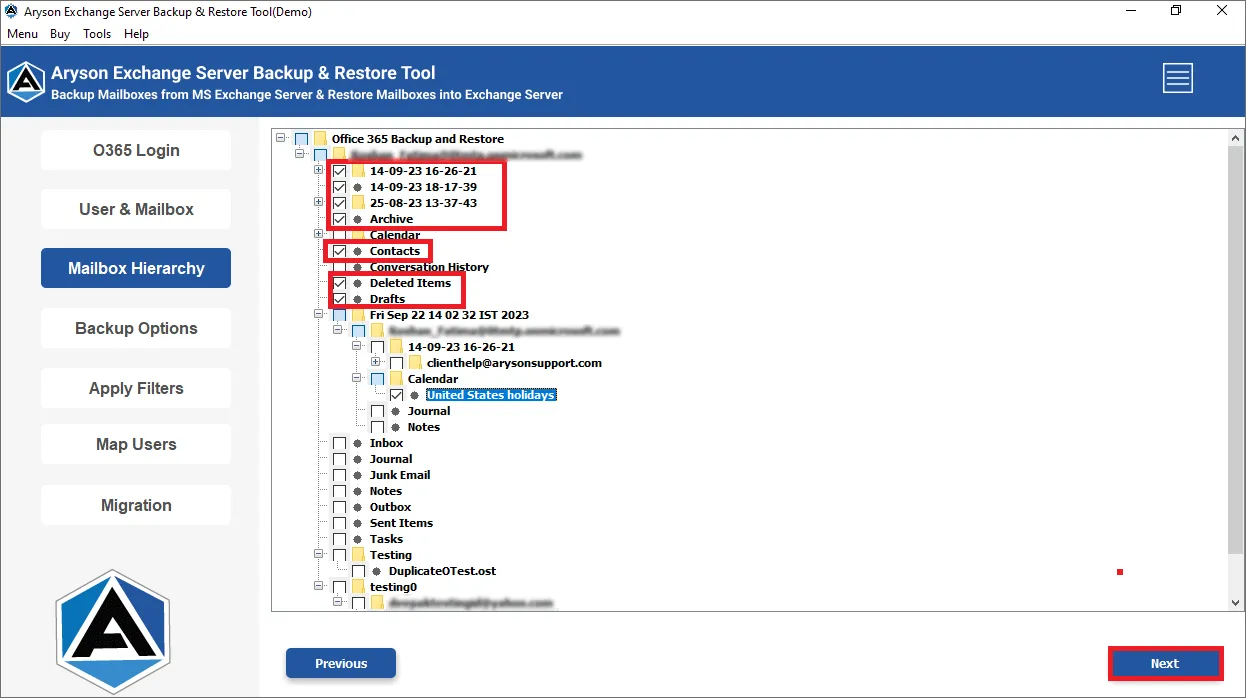
Step 7: Authenticate the destination Office 365 account using valid login credentials.
7.1: Using OAuth 2.0
- Enter the destination Office 365 admin account and click Login with Microsoft.
- Provide the password and click Sign in
- Approve Multi-Factor Authentication (MFA)
- If prompted, open the Microsoft Authenticator app on your mobile device.
- Approve the sign-in request.
- If a matching number is displayed (e.g., 45 ), enter that number in the Authenticator app and approve the request.
Note: While selecting the Office 365 account in the browser window, make sure you have already logged in to the required account beforehand.
7.2: Using Client ID & Secret
- Enter the Microsoft 365 Admin Account, Application (Client) ID, Client Secret, and Tenant ID to establish and authenticate the connection.
Note: Follow the instructions above to create the Azure Active Directory application and enable API permissions. (same as the source account connection) and refer to the screenshots provided for authenticating the source account.
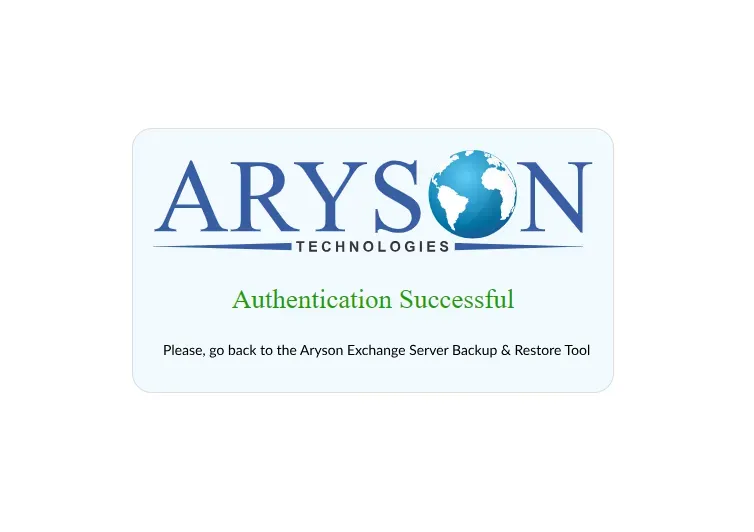
After authenticating successfully, a message is displayed showing the destination account and login type.
Step 8: Map each source mailbox to a destination user and choose where its data should be migrated. Many-to-Many and Many-to-One mapping can be done in the source and destination accounts.
Step 9: Configure Advanced Migration Filters
- Remove Duplicates on the Basis of To, From, Subject, Body: Enable this to detect and delete the same items by comparing attributes such as To, From, Subject, and Body.
- Free Up Server Space: Delete emails from the source account after successful backup.
- Date Filter: Enter a start and end date to backup data within the selected period.
- Custom Folder Name: Provide a name of your choice for the destination folder or where your mailbox data will be saved. It must not contain these characters: \?/*
- Skip Migrated: Enable this to migrate only new or modified items and skip those items that have already been migrated.
- Exclude Empty Folders: Do not back up folders that contain no items.
- Map to Default Folders: Back up items from source system folders to corresponding Office 365 system folders.
- Include Items: Back up only the items that are checked: emails, calendar events, contacts, attachments, notes, and tasks.
- Reset Filters: Click this button to reset the filters applied.
Click Start Backup to begin the Office 365 to Office 365 backup process.
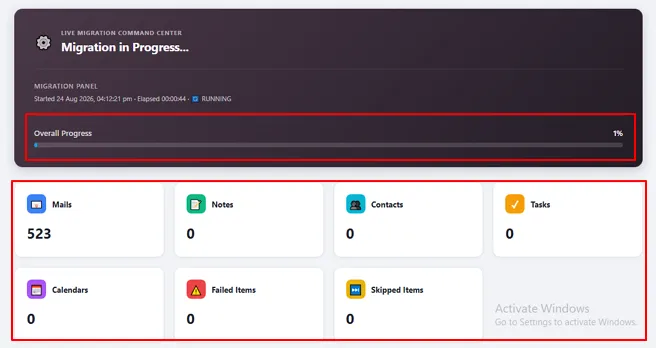
Step 10: Monitor and Complete the Office 365 to Office 365 Backup
After clicking Start Backup, monitor the backup progress and review transfer statistics in real time.
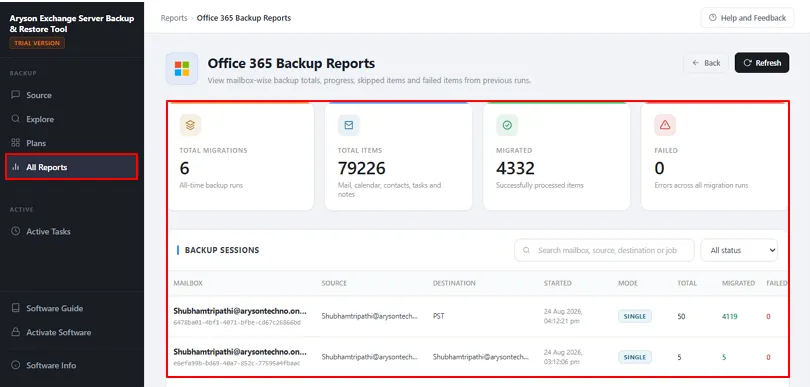
Step 11: Click All Reports to view the migration reports after migration.
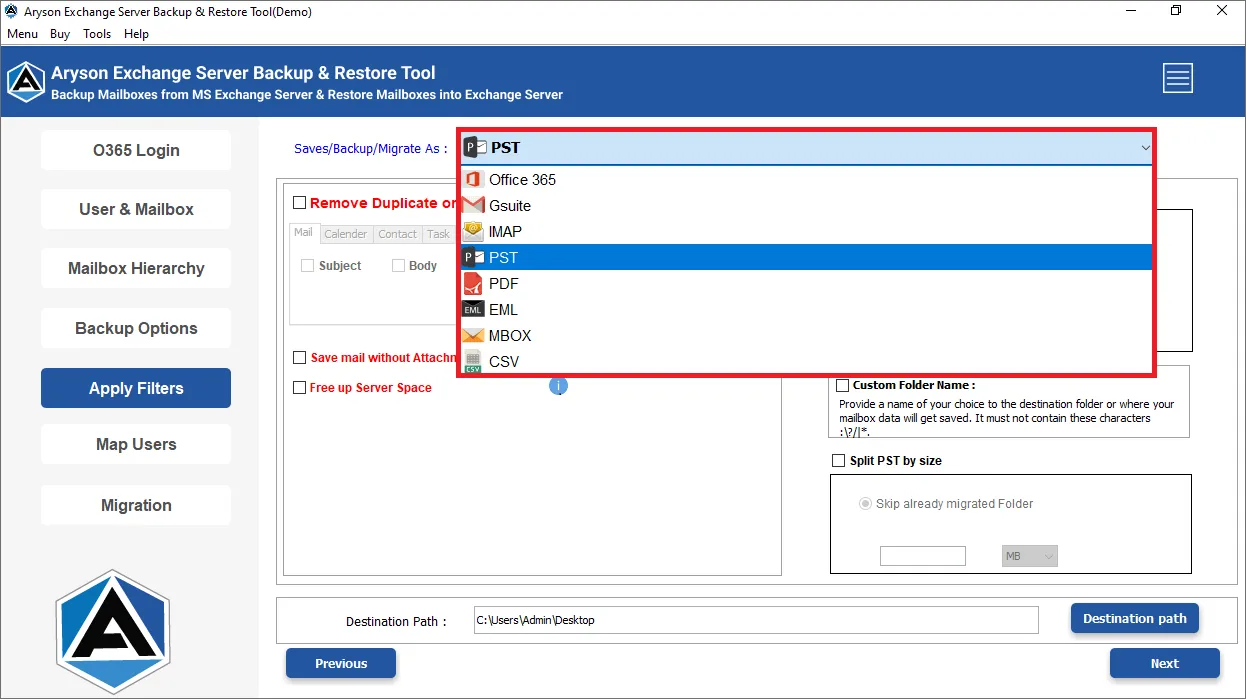
Step 6: Select PST as the destination to back up your data.
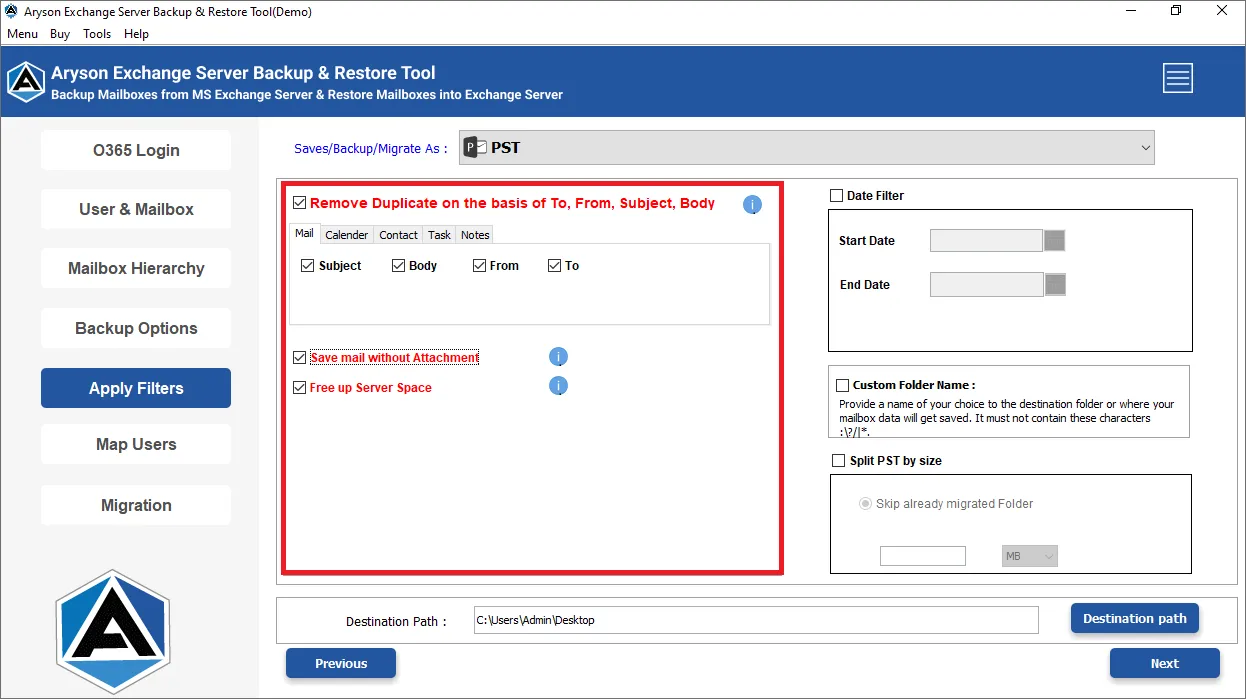
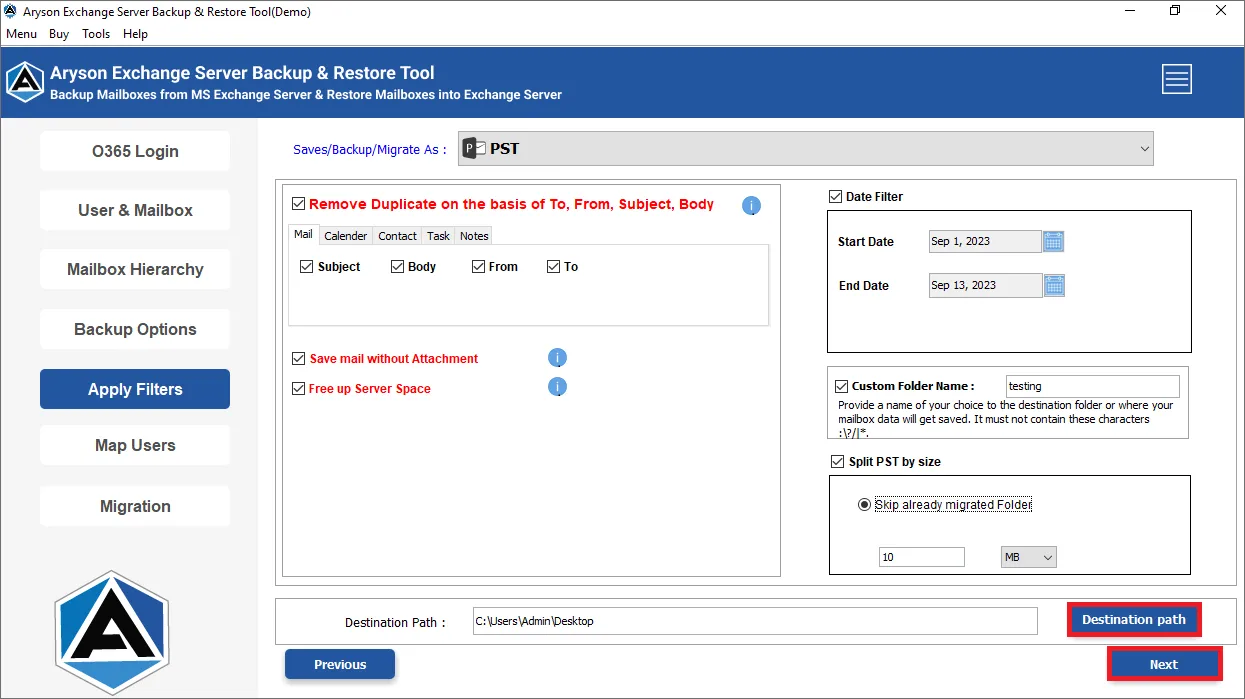
Step 7: Configure Advanced Migration Filters
- Remove Duplicates on the Basis of To, From, Subject, and Body: Enable this to detect and delete the same items by comparing attributes such as To, From, Subject, and Body.
- Free Up Server Space: Delete emails from the source account after successful backup.
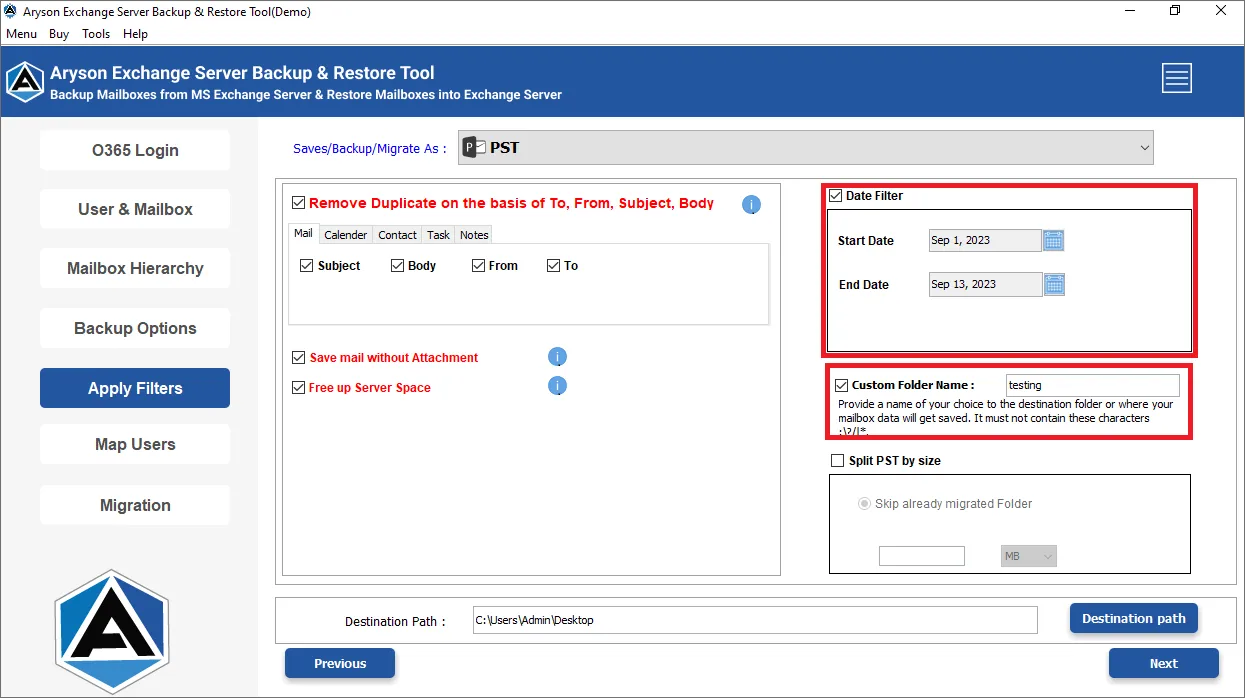
- Date Filter: Enter a start and end date to backup data within the selected period.
- Custom Folder Name: Provide a name of your choice for the destination folder or where your mailbox data will be saved. It must not contain these characters: \?/*
- Skip Migrated: Enable this to migrate only new or modified items and skip those items that have already been migrated.
- Exclude Empty Folders: Do not back up folders that contain no items.
- Include Items: Back up only the items that are checked: emails, calendar events, contacts, attachments, notes, and tasks.
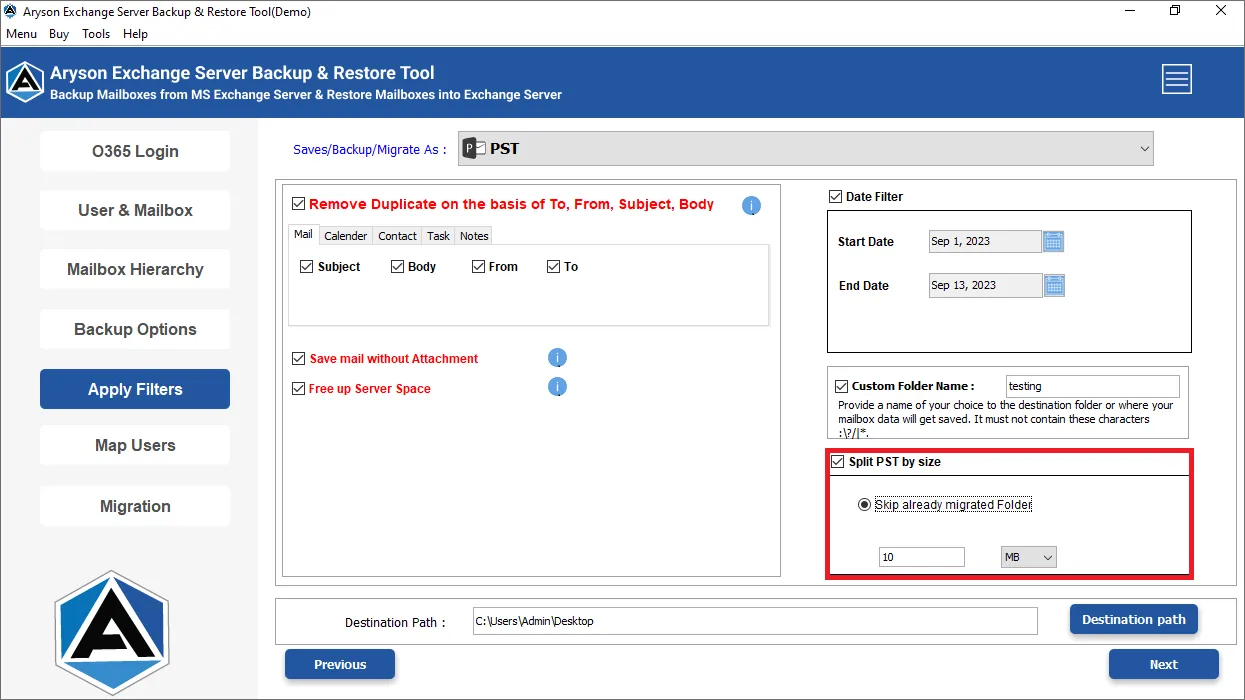
- Split PST by size: Split the large output PST file into smaller files.
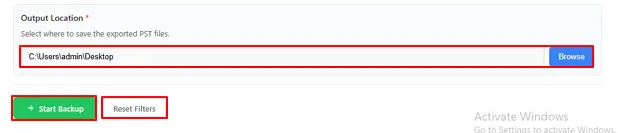
Step 8: Click the Browse button to select the output folder path, and hit Reset Filters to reset the applied filters.
Click Start Backup to begin the Office 365 to PST backup process.
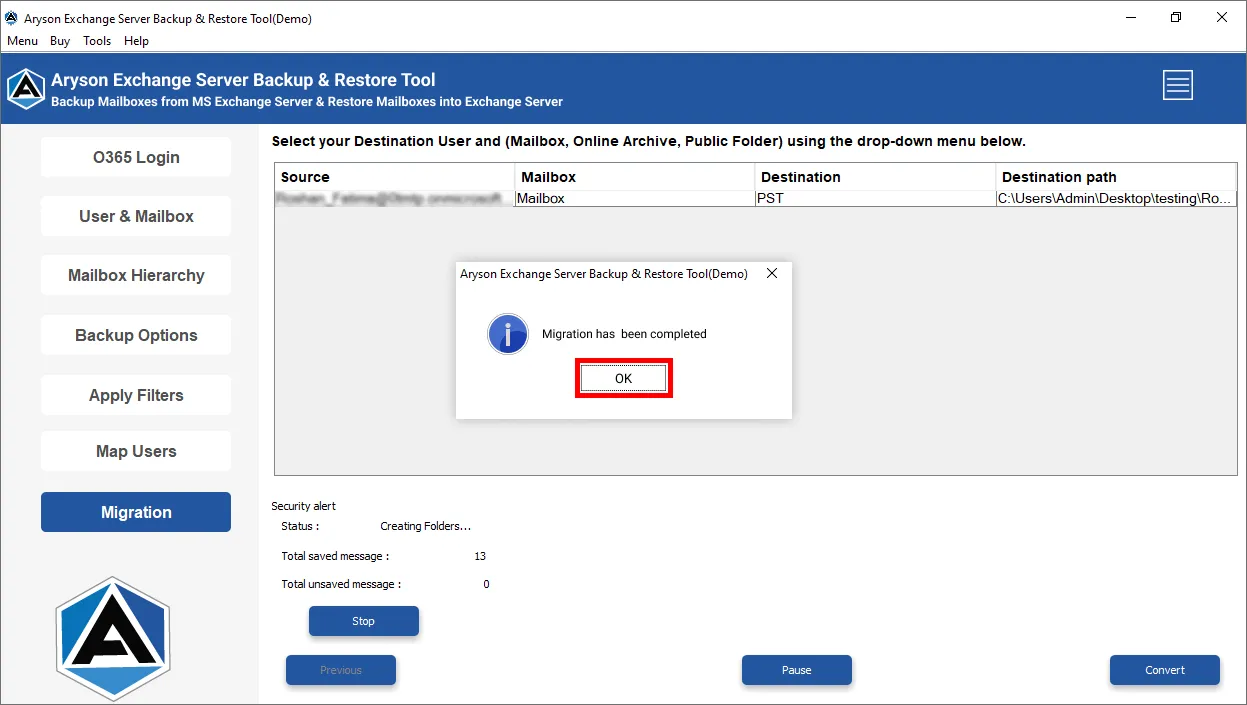
Step 9: Monitor and Complete the Office 365 to PST Backup
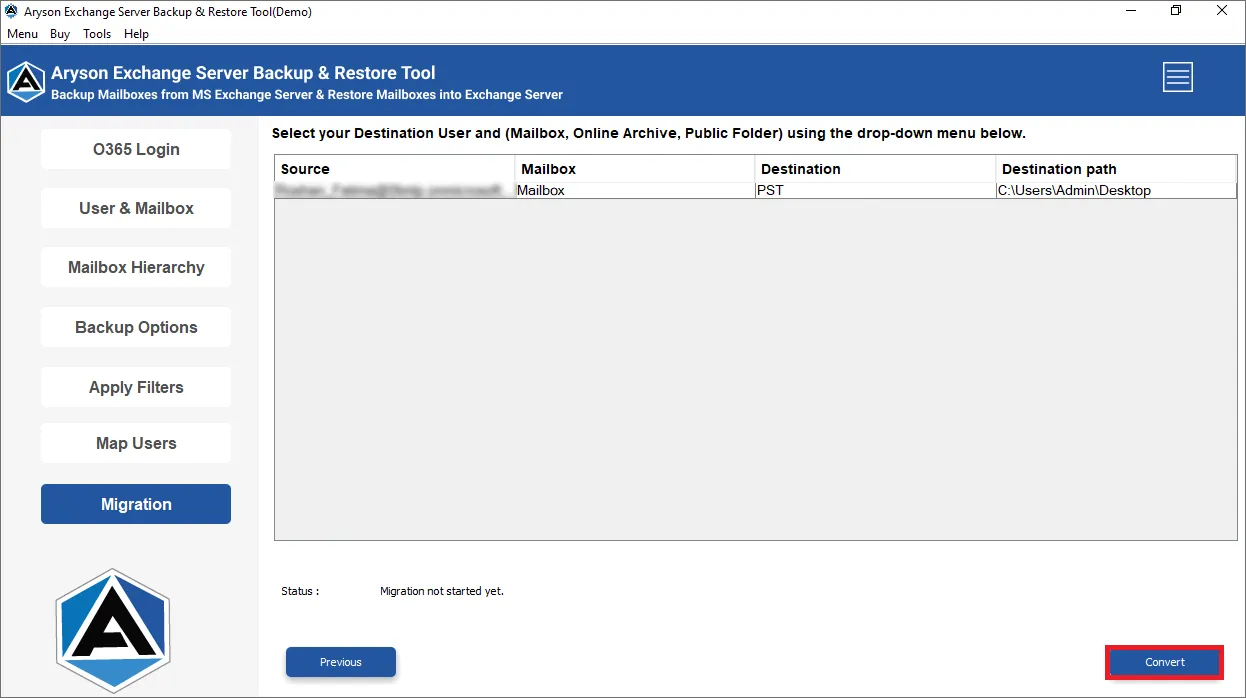
After clicking Start Backup, monitor the backup progress and review transfer statistics in real time.
Step 10: Click All Reports to view the migration reports after migration.