Complete Step-by-Step Guide for the Aryson OST Viewer Tool
View and manage Outlook OST data with the Aryson OST Viewer, which lets you access emails, attachments, contacts, calendars, notes, and tasks without requiring Outlook. Preview OST mailbox data and save it to multiple formats, including PDF, MBOX, MSG, EML, CSV, and PST, or migrate mailbox data to Office 365 using secure authentication methods such as Modern Authentication and Client ID & Secret.
- Table of Content
- Software Working Process
- Activation Guide
- Installation & Uninstallation
- User Interface
Software Working Process
Step 1: Download and install the Aryson OST Viewer Tool on your device.
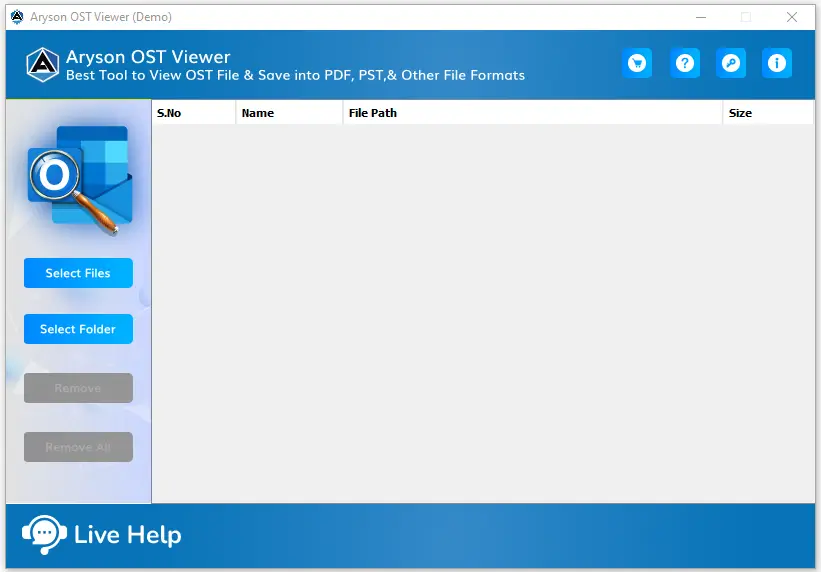
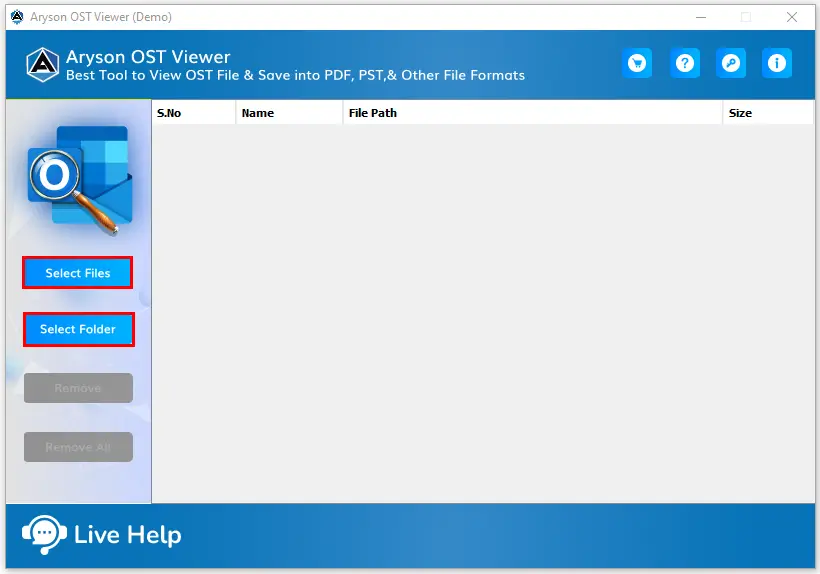
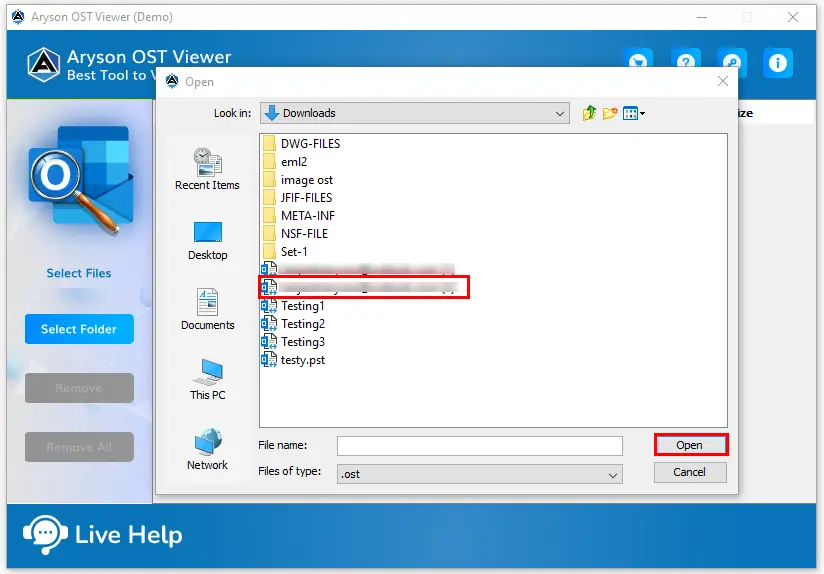
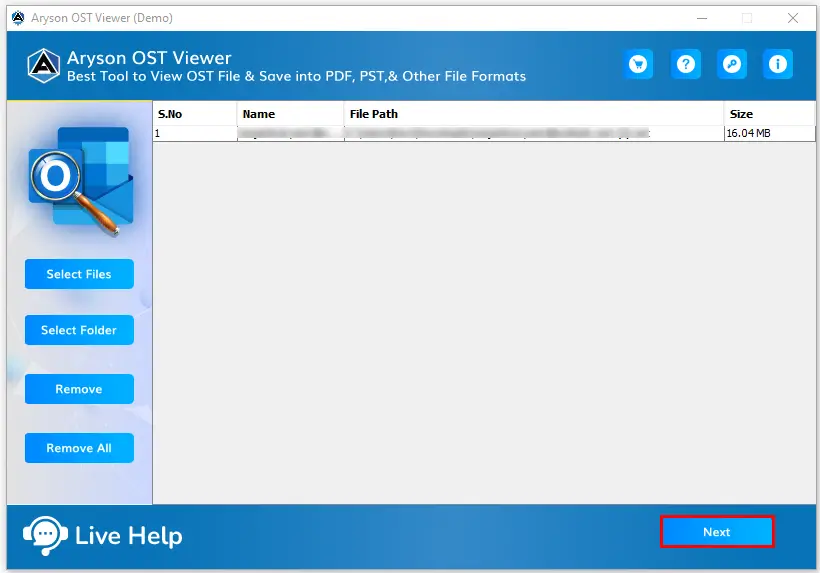
Step 2: You can load Outlook data files (OST/PST) using any of the following options:
- Drag and Drop: Drag and drop the required OST/PST files into the software.
- Load Outlook Files: Automatically detect and load OST/PST files associated with configured Outlook profiles on the system.
- Choose Manually: Browse your system and select the required OST/PST file.
- Add Folder: Add a folder containing multiple Outlook data files.
- Find: Search for OST/PST files by selecting a drive or searching by file name.
- Load: Select the required file from the search results and click Load.
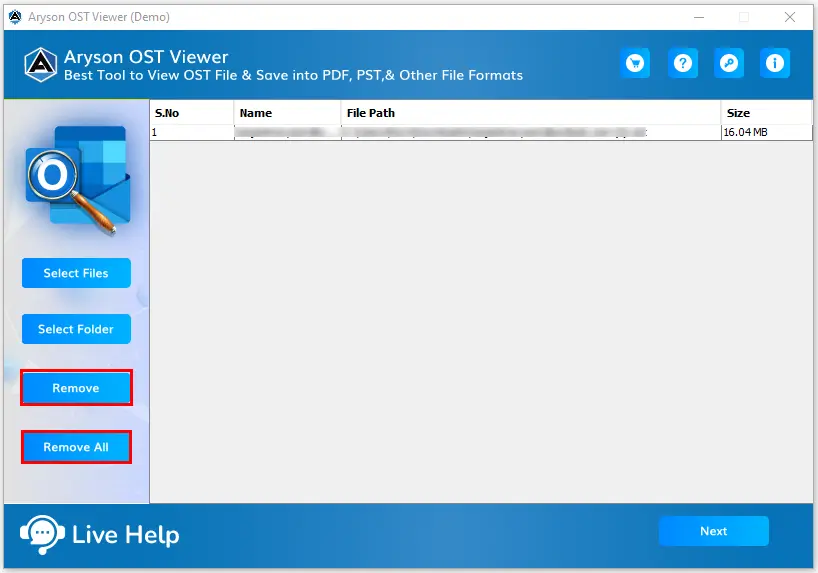
- Remove File: Use this button to remove all the loaded OST files.
The search results display details such as file name, file path, size, type, modified date, and status. The software identifies the file condition, marking healthy files accordingly and corrupted files in red. Slightly corrupted files can be processed, while heavily corrupted files may be skipped.
Preview and Search OST/PST Mailbox Data
Step 3: Browse the OST/PST Folder Structure and Preview Mailbox Items
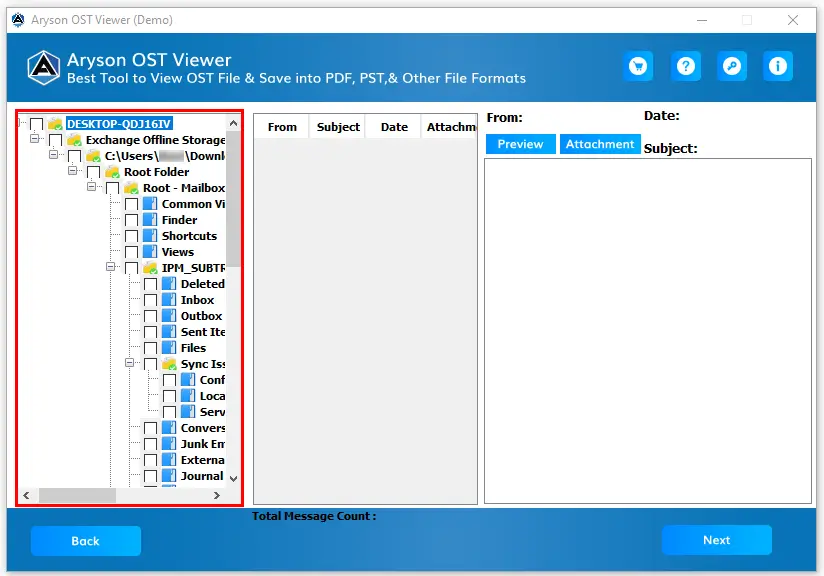
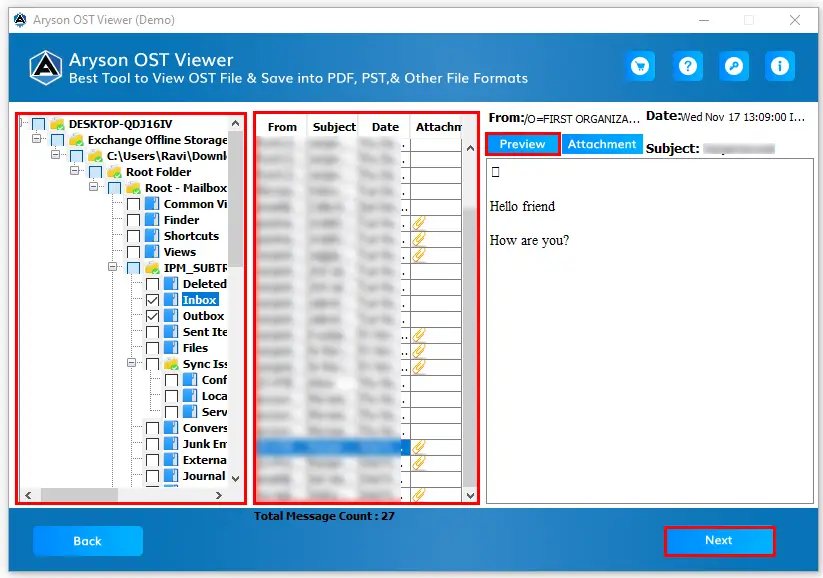
- Browse the folder tree in the left pane to view the mailbox hierarchy.
- Select a folder to load its contents into the J-table.
- The table displays email details such as From, Subject, To, and Date.
- A pin icon indicates that an email contains attachments.
- Click on the bold-formatted file or selected email to open its detailed preview.
- Use the Open in Browser option to view the email body in a web browser.
- Download individual attachments or use Download All to save multiple attachments.
- Smart Search: Use the search panel to locate specific emails based on To, From, Subject, Emails with Attachments, and Date Filter.
- Click Search to display matching results or Cancel to stop the search.
Step 4: Preview the Email Details
The email preview displays From, To, CC, Subject, and other available message information through separate viewing options:
- Body: View the complete email content and message text.
- Attachments: View and download files attached to the email.
- Header: Inspect the technical header information of the message.
- MIME: View the MIME content and message structure.
- Raw HTML: Examine the original HTML source of the email.
- Contacts: View contact information stored in the mailbox.
- Calendar: Review calendar events (week view) and their associated details.
- Tasks: Access tasks stored within the Outlook data file.
- Notes: View notes saved in the mailbox.
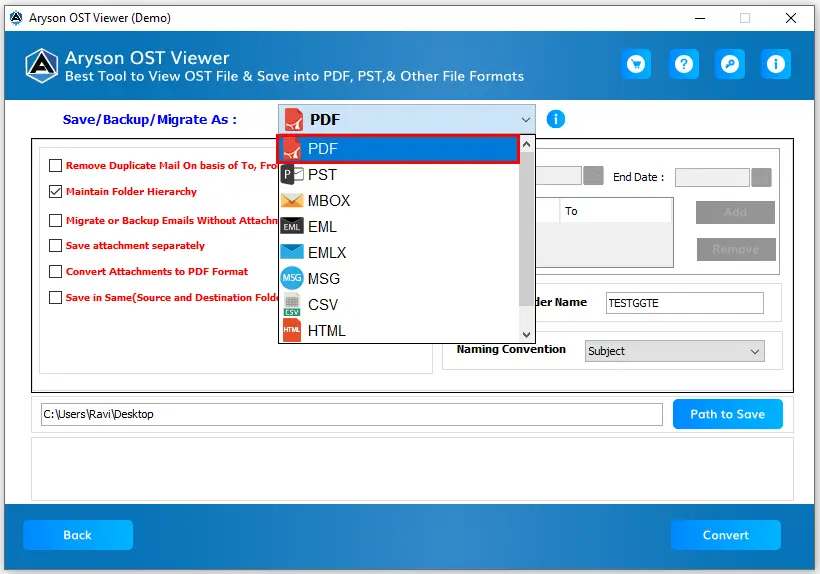
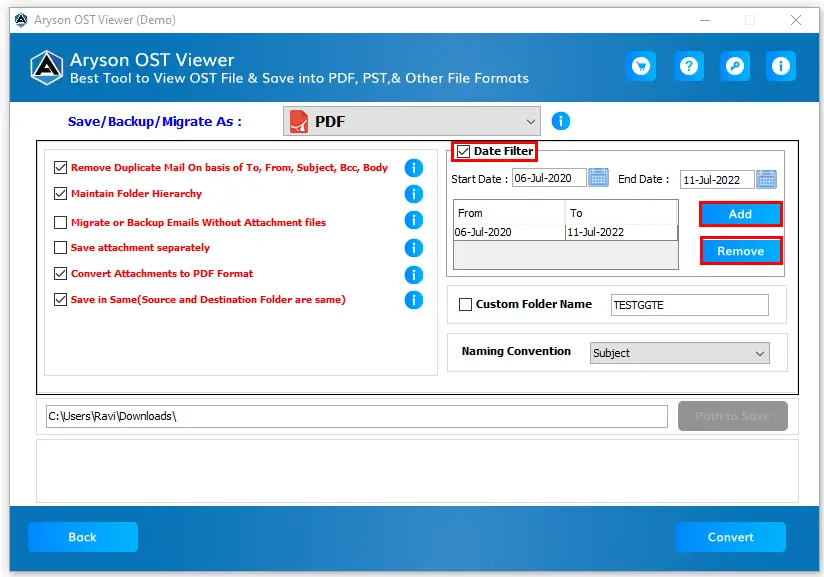
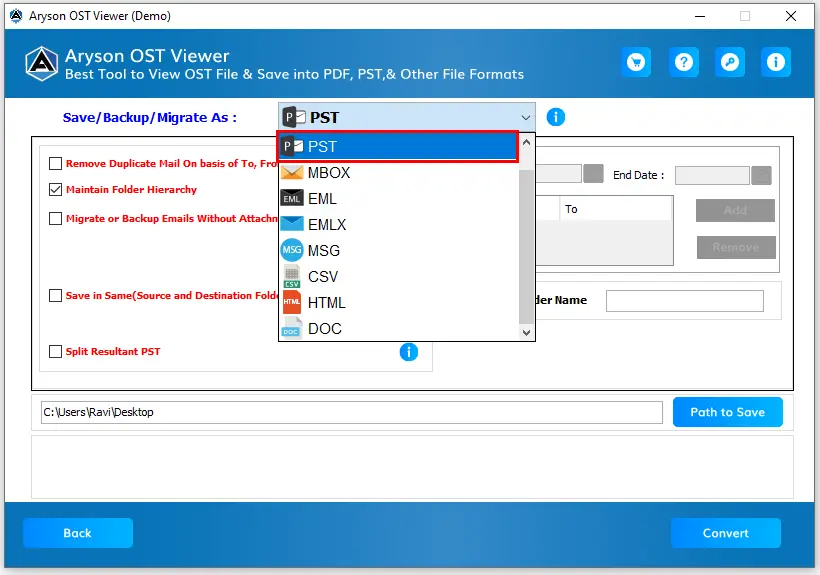
Step 5: Select the Required Output Format
Click Save Outlook File and choose the required destination format. The tool supports: PST, EML, MSG, PDF, MBOX, and CSV.
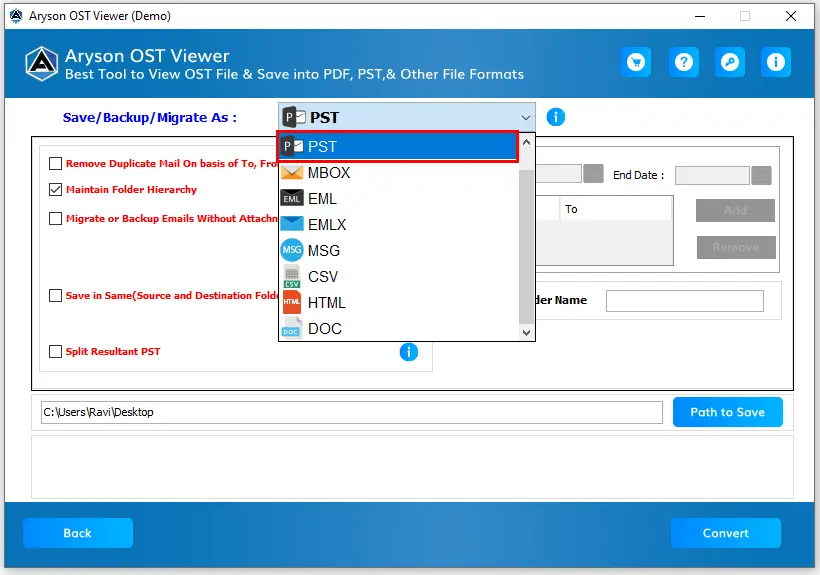
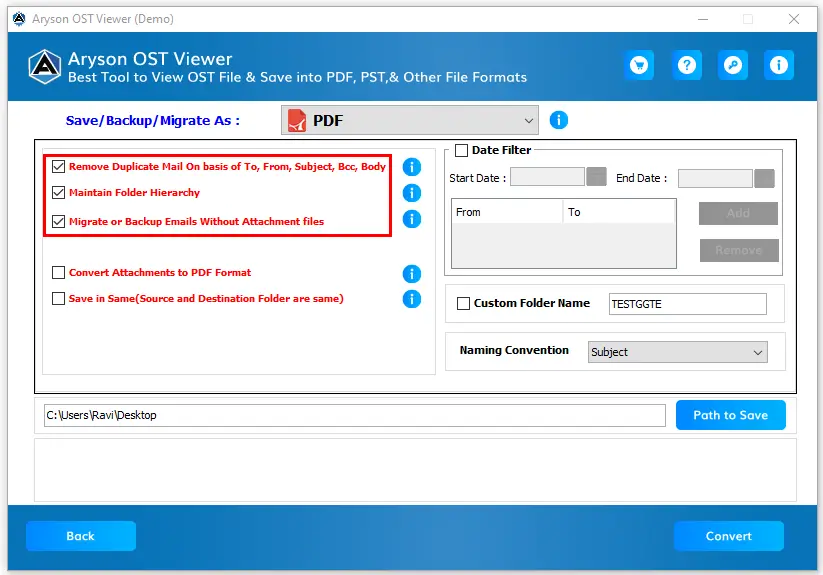
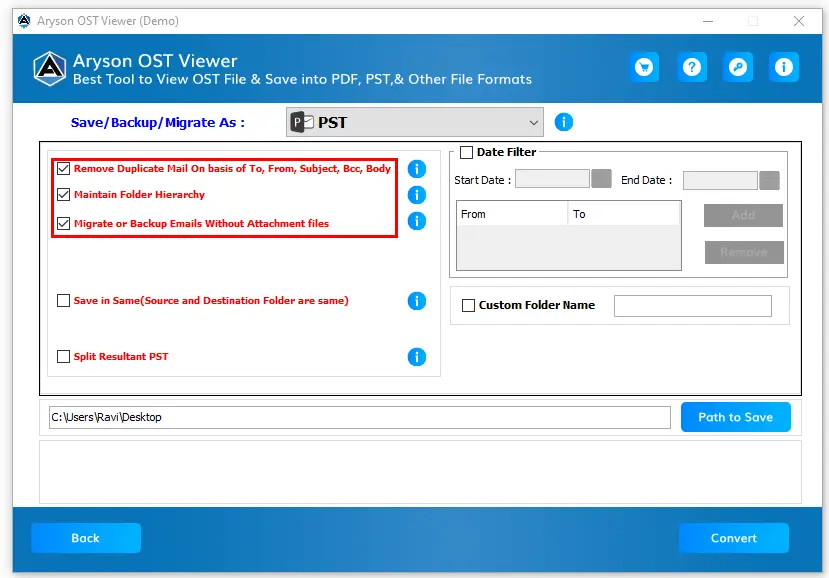
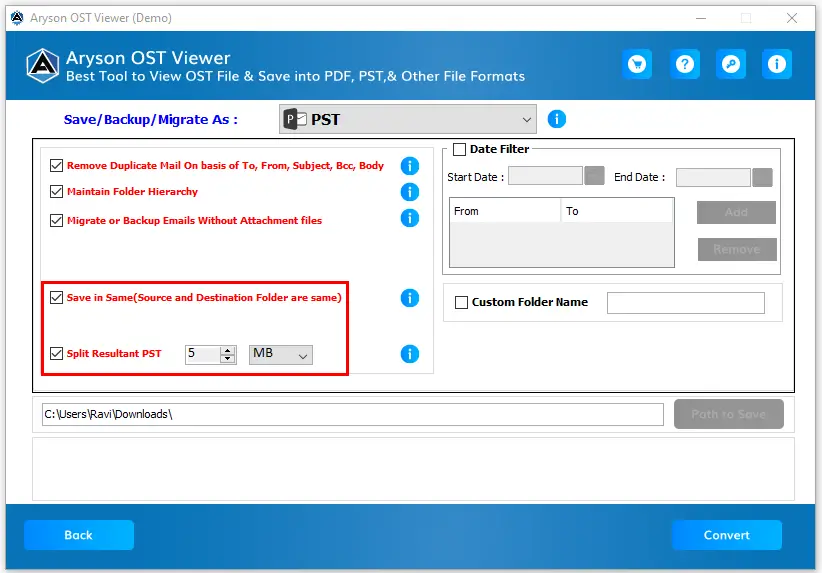
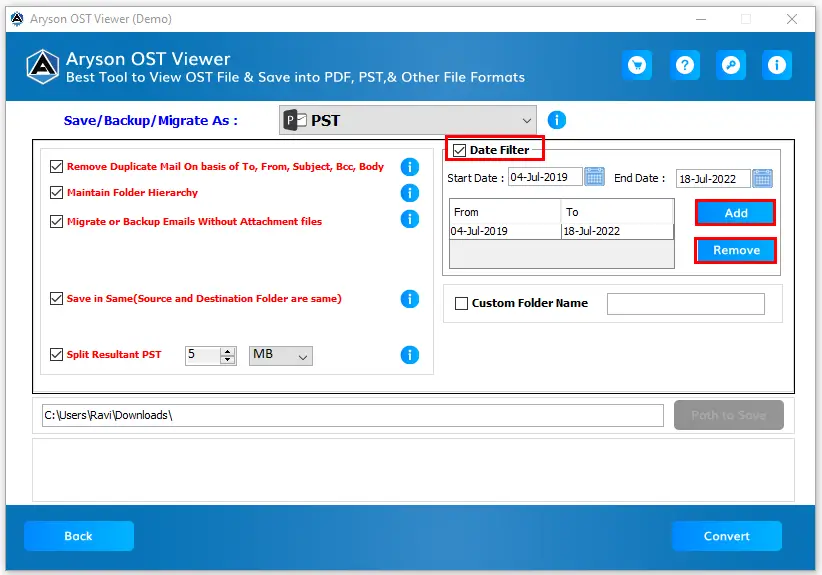
Step 6: Configure Advanced Export Options
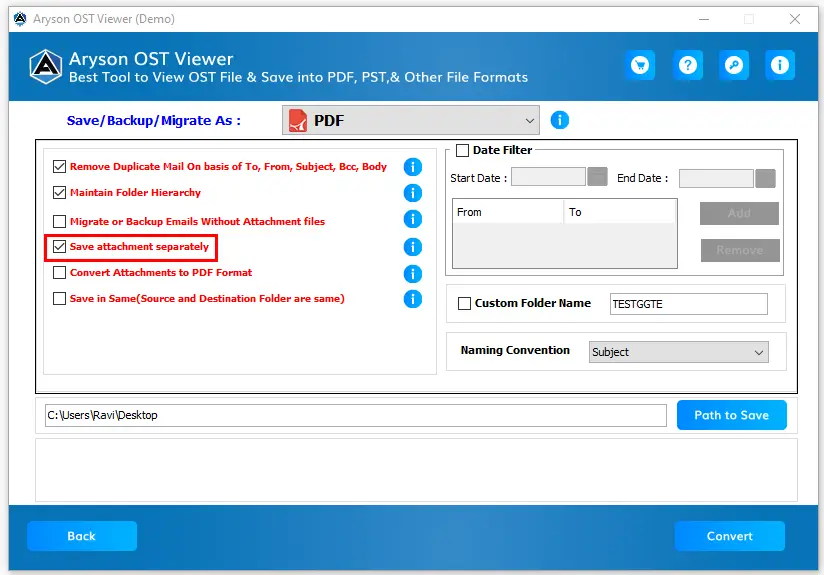
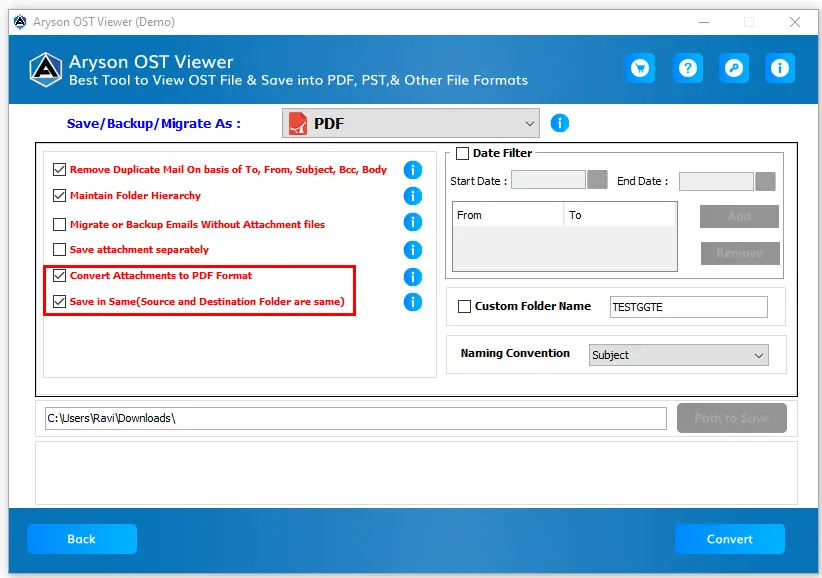
Configure the following options according to your requirements:
- Remove Duplicate Items: Remove duplicate mailbox items before saving.
- Attachment Handling: Choose to Keep Attachments, Extract Attachments Separately, or Exclude Attachments.
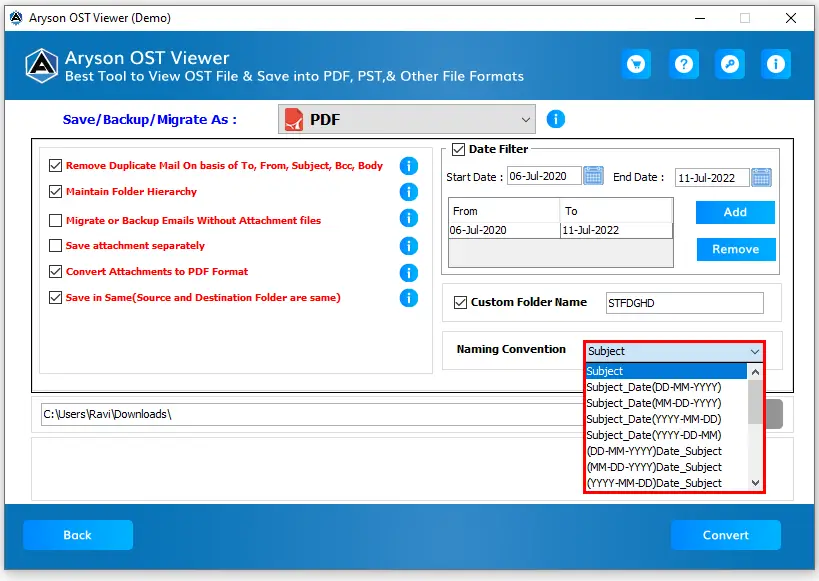
- Custom Folder Name: Assign a custom name to the destination folder.
- Date Filter: Select Start Date and End Date, Include Selected Date, Exclude Selected Date, or All Dates.
- Split PST File: Enable PST splitting and divide the resultant PST according to the selected file size, supporting sizes from 999 MB to 45 GB.
- Duplicate Email Filter: Save duplicate emails in a separate folder and optionally preserve their original folder hierarchy.
- Duplicate Criteria: Define an email as duplicate when selected fields such as To, From, Subject, CC, BCC, and Body match.
- Text-Based Filter: Filter emails using To, From, Subject, CC, or BCC with conditions such as All, Contains, or Does Not Contain.
- Skip/Resume: Enable the skip option to avoid processing previously handled data and resume the operation when required.
Click Save to apply the selected settings.
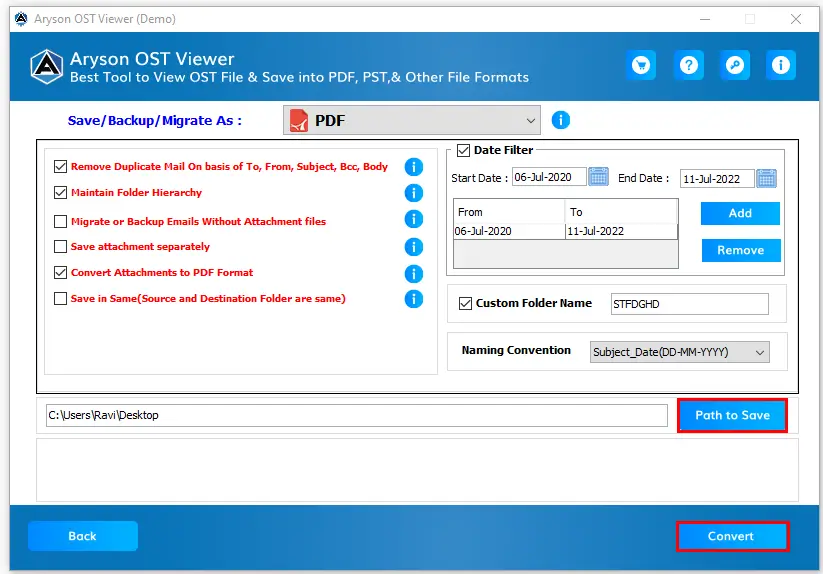
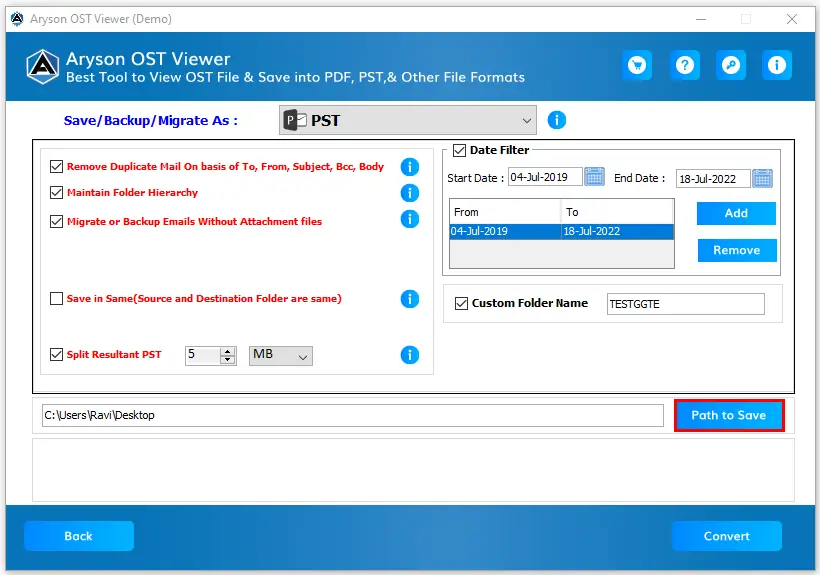
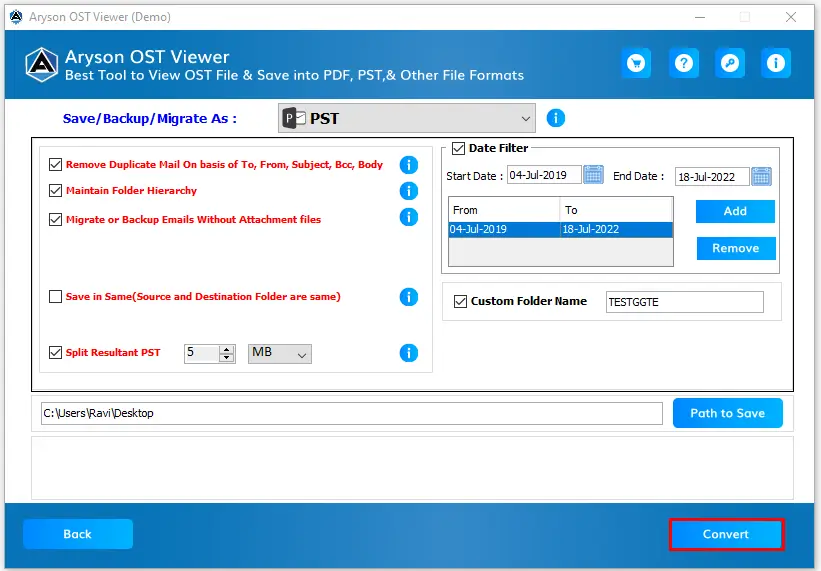
Step 7: Select the Destination and Start Export
Click Browse to select the destination path for the exported files. Click Save to start the export process.
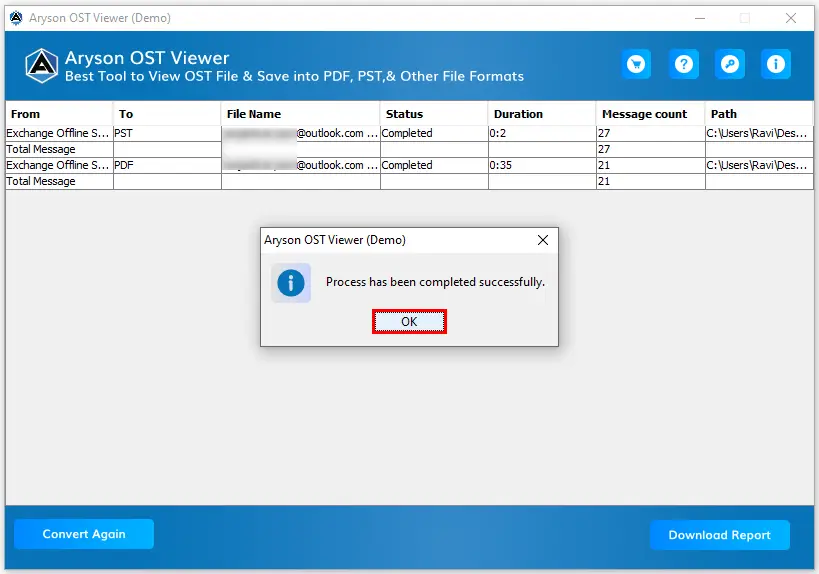
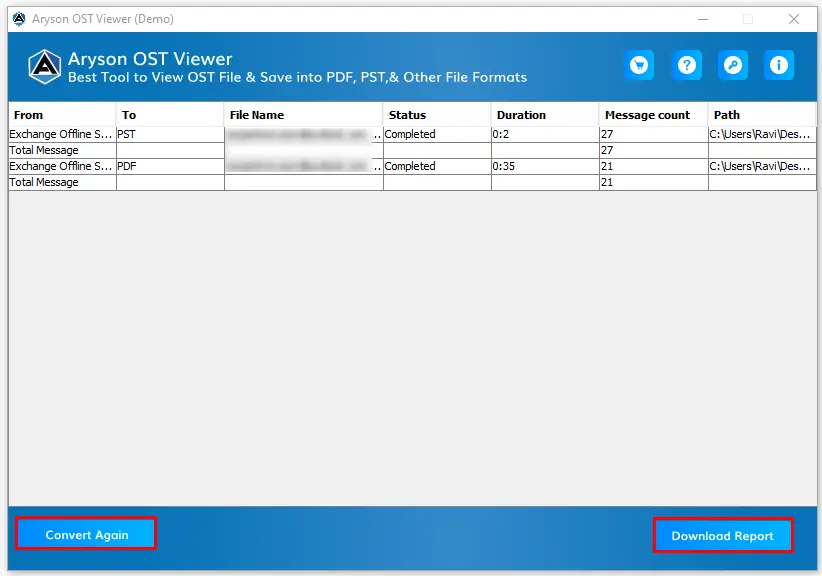
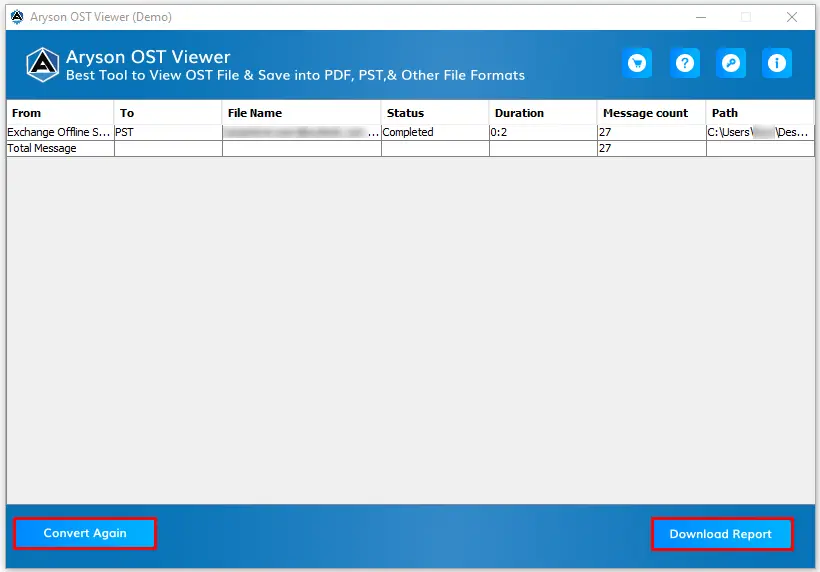
Step 8: Monitor the Export Process
Monitor the ongoing export through the progress window to check the processing status and other available details. Use the Stop option to halt the process when required.
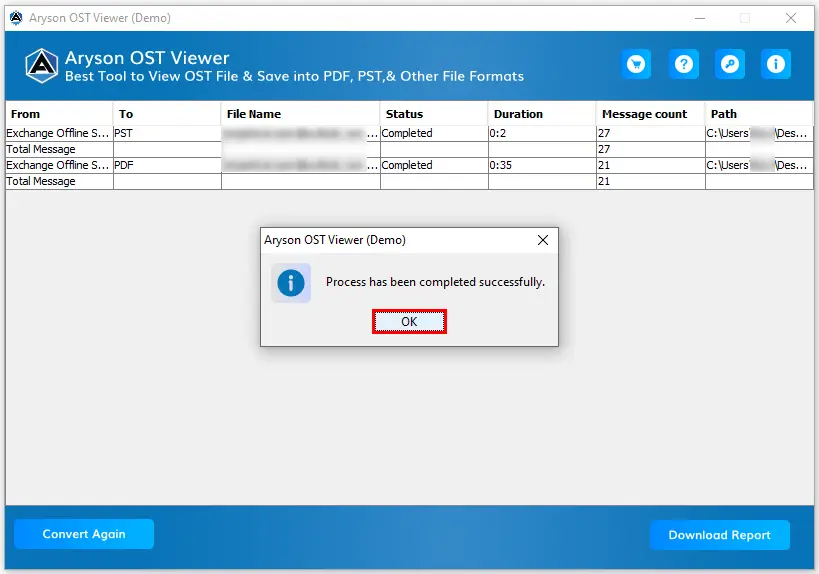
Step 9: View Export Logs
Click View Logs to review detailed records of the OST/PST processing and export operation.
Step 5:Choose Office 365 Migration and Authentication
Click Migrate to Office 365 and select the required authentication method:
- Modern Authentication (Browser Login)
- Client Secret
For modern authentication, choose either single-user or admin authentication.
Step 6: Authenticate to Office 365
Step 6.1: Authenticate via Modern Authentication
Step 6.1.1: Modern Authentication – Single User
- Enter the Office 365 account ID.
- Select Remember This Account if you want to save the account for future use.
- Continue with the browser-based Microsoft authentication.
- Choose the account that you entered in the software to continue.
- Complete the authentication process and grant the required permissions.
- After successful authentication, a message is displayed showing that authentication is complete.
Step 6.1.2: Modern Authentication – Admin
- Enter the Office 365 Admin Account >> click Authenticate & sign in with the required Microsoft account and password.
- Complete MFA, if prompted.
- Grant the requested permissions.
- After successful authentication, continue with the migration.
Note: Make sure the required Microsoft 365 account is already signed in through the browser before starting browser-based authentication.
Step 6.2: Client Secret Authentication
| Field | Description |
|---|---|
| Application (Client) ID | Azure application client ID |
| Client Secret | Secret generated for the application |
| Tenant ID | Microsoft Entra ID tenant ID |
For complete instructions on creating the Azure Active Directory application and enabling API permissions, visit:
Create Azure Active Directory and Enable API Permission GuideStep 7: Configure Migration Options
After authentication, configure the migration according to your requirements:
- Migration Scope: Select the mailbox data to migrate, including emails, contacts, and calendar events.
- Remove Duplicates: Prevent duplicate items from being migrated.
- Follow Tree Hierarchy: Maintain the existing OST/PST folder hierarchy in the destination mailbox.
- Mapped with Default Mailboxes: Map source folders to the corresponding default Office 365 folders.
- Export to Custom Folder: Save migrated data under a custom folder name.
- Date Filter: Limit the migration to data within the selected date range.
Step 8: Map OST/PST Files to Office 365 Mailboxes
Select the OST/PST files and map each source file to the required target Office 365 mailbox.
- For bulk migrations, use Import CSV to import multiple mailbox mappings simultaneously.
- Click Import CSV.
- Browse and select the mapping CSV file.
- Use Sample CSV to download the required template.
- Select the required mailboxes.
- Click Apply.
- Review the mappings and click Save Mapping and Start.
Note:
- Only a licensed and valid mailbox can be selected as a migration destination. Unlicensed mailboxes cannot be selected.
- Mailbox types may include User Mailbox and Shared Mailbox.
*If your previous migration stops midway. In the next migration, a pop-up will appear, showing that you can either start a fresh migration or resume the previous one. *
*Contacts and tasks are by default mapped to the default folders of Outlook once you migrate OST to Office 365*
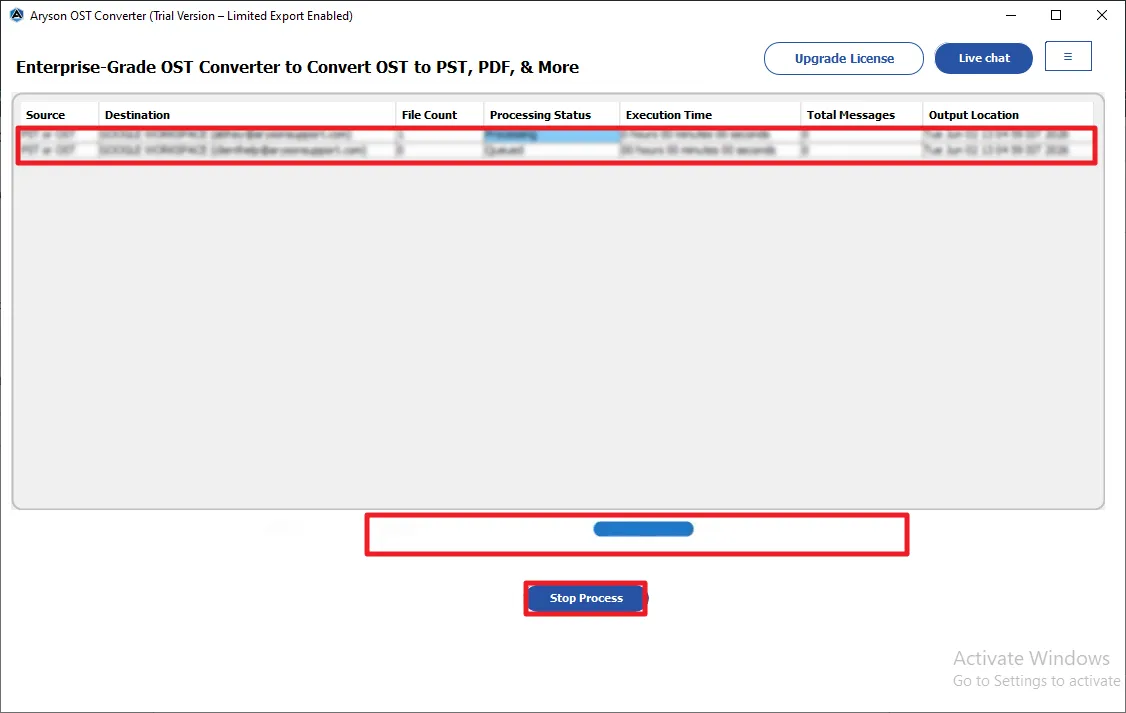
Step 9: Monitor the Office 365 Migration
After migration starts, monitor the process and review the available migration statistics, including:
- Network Status: Displays the current network connection status during the migration.
- Destination: Shows the target Office 365 mailbox where the data is being migrated.
- Progress: Displays the current migration progress and completion status.
- Item Count: Shows the number of mailbox items processed during migration.
- Skipped Items: Displays the number of items that were skipped during the migration.
- Failed Items: Shows the number of items that could not be migrated successfully.
- Attachments Saved: Displays the number of attachments successfully migrated to Office 365.
- Data Processed: Shows the total amount of mailbox data processed during the migration.
- Stop: Allows you to stop the ongoing migration process.
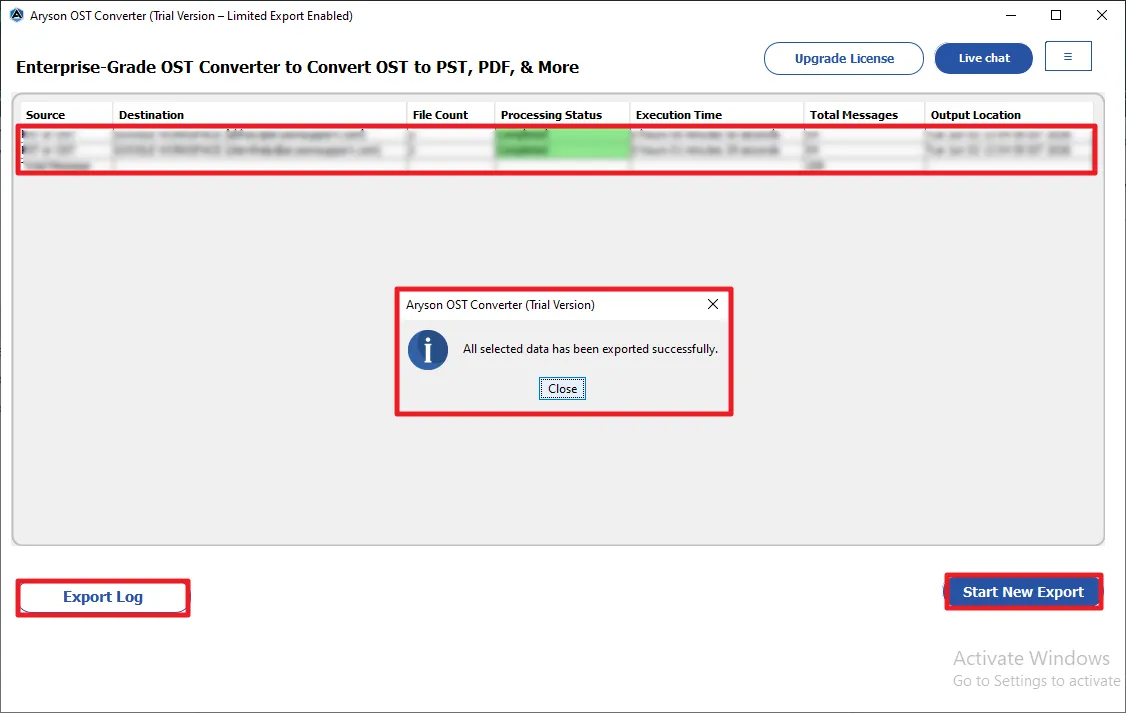
Step 10: View Migration Logs
Click View Logs to review detailed records of the Office 365 migration, including the processing status and migration results.
Activation Guide
Activate the Software
Installation & Uninstallation
Installation & Uninstallation of Software
User Interface
User Interface
After downloading the Aryson OLM Converter Tool, you will find the welcome screen as played below.